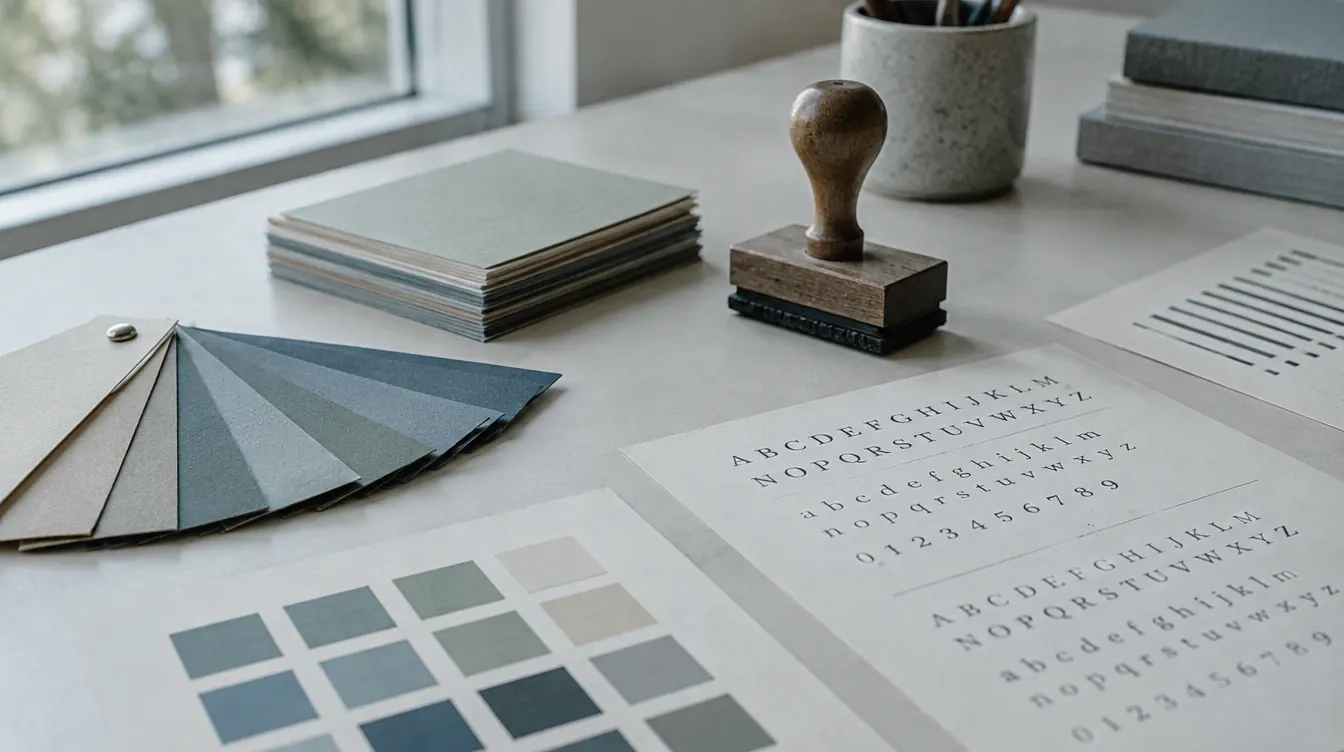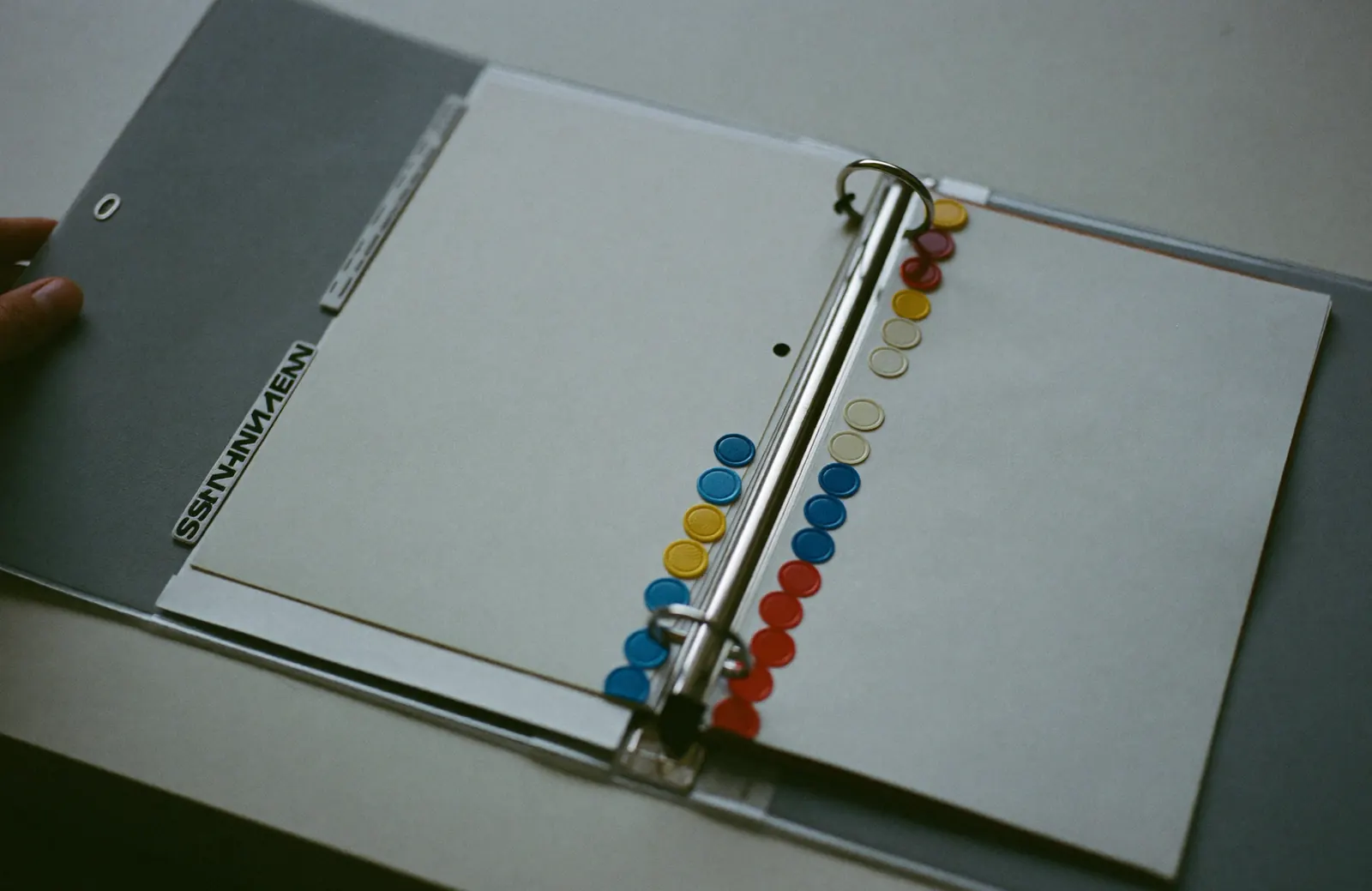
Start from the decisions other people have to make in your name, then write a rule and a real example for each one. Cover logo, colour, type, imagery and voice. Good guidelines pass one test: someone who wasn't involved can make a correct proposal or social post without asking you.
What should brand guidelines include?
Brand guidelines should include the rules for every element people use without a designer next to them. Write down what the brand stands for in a few lines, then cover the parts below. Leave out anything nobody will ever need to apply.
| Section | What to write down | Warning sign |
|---|---|---|
| Core | Who you are for, what you promise, how you differ | It could also describe a competitor |
| Logo | Versions, minimum size, clear space, which file to use where | Only one file exists, and it's a JPG |
| Colour | Exact values, and the role of each colour | A list of colours with no roles |
| Type | Fonts, hierarchy, licences, a fallback font | Nobody knows if the team may use the font |
| Imagery | What a good image shows, with real examples | Only adjectives such as "authentic" |
| Voice | How you sound, with before and after examples | "Friendly but professional" and nothing else |
How do you create them, step by step?
- List the real tasks. Ask who makes things in your name, and what they make: proposals, job ads, slides, social posts, signage.
- Collect what exists. Put your current materials side by side. The inconsistencies show which rules are missing.
- Decide before you document. A guide can't fix an open question. If nobody has settled on your positioning, do that first.
- Write one rule and one example per decision. Examples do more than descriptions. Show a correct version next to a wrong one.
- Test it on someone new. Give a colleague a real task and only the guide. Everywhere they get stuck is a gap.
- Name an owner. One person answers questions and decides what changes.
How long should the guide be?
As short as your team can actually use, and our opinion is that most small companies should start much shorter than they think. A compact guide that gets opened beats an impressive one that doesn't. Add a section when people keep asking the same question, not because a template has a chapter for it.
What do people usually forget?
- Contrast rules. Say which colour pairs work for text. WCAG 2.2 asks for a ratio of at least 4.5:1 for normal text and 3:1 for large text at level AA.
- Font licences. A beautiful typeface is no use if your team can't legally install it or use it on the web.
- Where the files live. One link, one folder, and old versions removed.
- Text that machines can read. Your team's AI tools can't follow a rule that sits inside an image. Keep your voice rules and core description in plain text as well.
When should you get help?
You can write guidelines yourself if the identity is already sound and you only need to record it. Get help when the guide exposes a deeper problem, such as a logo that fails at small sizes or a palette that doesn't work on screen. At 5DAYS every identity package comes with a brand guide: compact in Brand Refresh (from €1,450), digital in Brand Identity (from €2,450) and extensive in Brand System (from €4,950), excluding VAT.